
Cleaning up the foundation with a $10M investment in the Detroit River
 Aug 3, 2026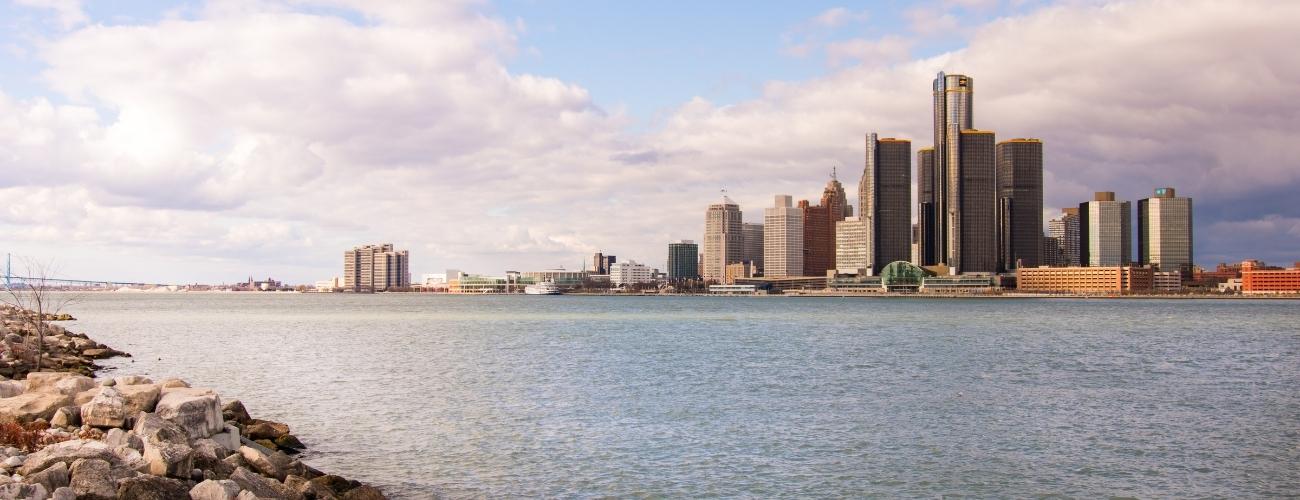
Connect With the Experts

Ellen Vial
Authored by Communications Intern Claire Daniels.
The News
Detroit’s riverfront has become one of the city’s greatest success stories. Over the past three decades, parks, trails and restored public spaces have helped rewrite the city’s Rust Belt legacy. Along the Detroit Riverwalk, through the William G. Milliken State Park, to the newly opened Ralph C. Wilson, Jr. Centennial Park, Detroit residents are rediscovering the joy of finding community in environmentally-oriented third spaces. These spaces have not only improved community connectivity, but also public health, wildlife restoration and economic growth that Detroiters and Michiganders can enjoy for years to come.
In order for this revitalization to be fully realized for public use across all areas of the Detroit River, it all starts with federal, state and local organizational efforts to fund the remediation and restoration of the natural foundations that have been impacted by decades of industry pollution in our soil, water and air.
Thanks in part to the tireless work of our member groups working to protect Detroit area watersheds and rivers, that kind of support is now here. Earlier this summer, the Environmental Protection Agency (EPA) and Michigan’s Department of Environment, Great Lakes, and Energy (EGLE) announced $10 million in joint cleanup funding. Backed by the Great Lakes Restoration Initiative (GLRI), the EPA is providing $6.5 million, with EGLE matching $3.5 million through the Make It in Michigan Competitiveness Fund.
The funding gives the green light for excavation to begin the cleanup, continuing efforts to remove the Detroit River as a designated Areas of Concern (AOC), with a projected total cost of $1 billion dollars. The project focuses on Trenton Harbor and Harbortown, removing about 800,000 cubic yards of contaminated sediment.
Since the contaminated sediment remediation will take place below the surface of the Detroit River, residents may not see the immediate impacts. However, this is a crucial step to lay the foundations for this remediation to continue until the Detroit River is removed from the list of AOCs, and to create the necessary conditions for wildlife restoration, safe fishing practices, and public recreation projects to take place.
And this is where our members come in. Our member organizations like Friends of the Detroit River, Friends of the Rouge and the Detroit Riverfront Conservancy are working around the clock to protect, promote and reimagine Detroit’s natural beauty to reach its full potential as a social, economic and environmental asset.
“Having lived and worked along the Detroit River my entire life, I’ve seen firsthand the tremendous value of these restoration efforts,” said Robert Burns of the Friends of the Detroit River. “The Detroit and Rouge Rivers are vital assets to our communities, and investments like these deliver lasting environmental, public health and economic benefits. This work is truly transformative, creating a brighter future for generations to come.”
The History
The Detroit River laid the industrial and economic foundation that built southeastern Michigan as we know it today. Providing a major port and pathway connecting the Upper Great Lakes to Lake Erie, the Detroit River supported decades of high traffic, importing raw materials for the automobile and steel industries and subsequently exporting Detroit’s industry to the rest of the country.
Today, this immense waterway is still paying the price for that industrial legacy. Beneath the surface of the Detroit and Rouge rivers lies decades of contaminated sediment— pollution that threatens wildlife, public health and the future of some of Southeast Michigan’s most important waterways.
With such intense production and economic prosperity of the early 20th century, there were no environmental protections in place to bar the flow of pollution into the Detroit River. This has resulted in years of unregulated dumping, inefficient wastewater disposal and decades of legacy pollutants accumulating and burdening nearby communities and wildlife.
The Journey
Securing the funding required years of planning, advocacy and collaboration among local organizations, state leaders and federal agencies. In 2021, the Biden administration introduced the Bipartisan Infrastructure Law investing $1 billion into the GLRI to cleanup and restore AOCs.
In order to use this investment, states must already be able to bring an eligible fund amount to the EPA to be matched. So, in 2023, Friends of the Rouge’s Marie McCormick and Detroit Riverfront Conservancy’s John Hartig approached the Environmental Council about advocating for funding in the state budget for contaminated sediment remediation of the Detroit River AOC.
“This is a long-standing problem in our region,” said John Hartig, “and we have a once-in-a-century opportunity to address it for both present and future generations.”
Now in 2026 with some funding secured, the journey is far from over. Friends of the Detroit River will serve as the fiduciary of this $10 million investment and will continue to monitor and manage remediation in partnership with EGLE to ensure it is fully seen through.
The Environmental Council’s Detroit Program Manager Ellen Vial emphasizes that this progress is beneficial to us, to our wildlife and for our environmental diplomacy. “There’s a great return on investment. It’s good for the river ecology, and it’s good for the people who live here. It’s an international boundary, and a show of good faith to our neighbors in Canada.”
The Impact
Living in the Rust Belt region, oftentimes it is easy to feel like restoration projects never fully get realized and remain stagnant. However, Detroit offers a promising new reality not just for the city, but for the state and the Great Lakes Region as a whole. With its new riverfront developments in the last few decades, we have seen real tangible change and improvements. One that has revitalized economic stagnation, improved community connectivity and has brought previously lost wildlife back into their habitats. Michigan’s recent investment in cleaning these rivers is more than another line in the state budget. It’s proof that collaboration and sustained public advocacy can still move long-overdue environmental restoration forward.
Discover


Power environmental change today.
Your gift to the Michigan Environmental Council is a powerful investment in the air we breathe, our water and the places we love.
Sign up for environmental news & stories.
"*" indicates required fields